Feliza Huanca
📍 Calama, Province of Caranavi, Department of La Paz, Bolivia
What surprised us: Feliza is cultivating coffee since her youth. She still says that she is "not from the region", because she identifies a lot with her parents' culture who came from the Altiplano region (La Paz, The Andes) in the 70s. But Walter, her husband who is a local from Caranavi, denies.
"She knows this land better than I know."
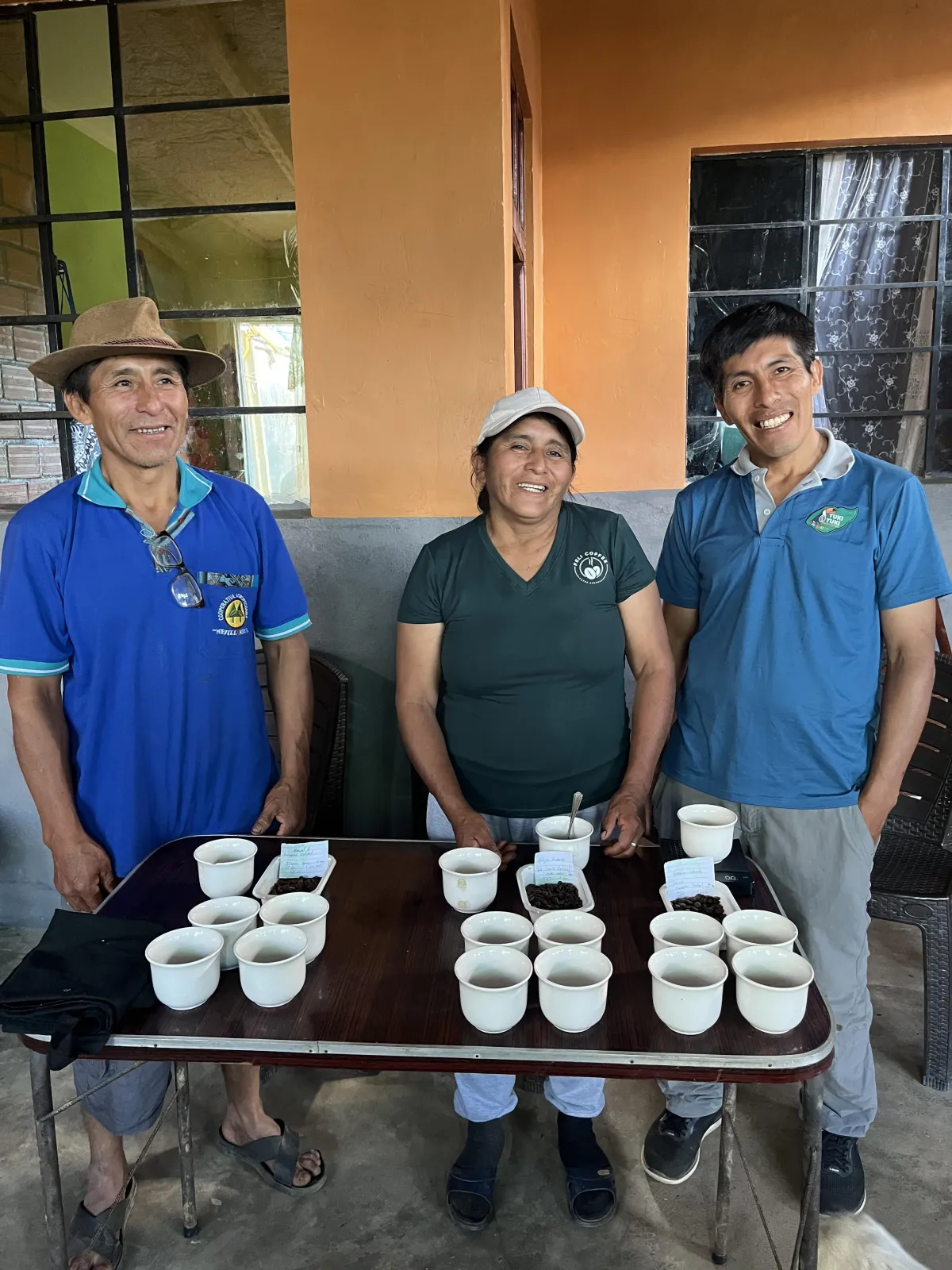
With Walter they work together on Feliza's finca and sell their coffee locally and for export. Feli Coffee is the name under which you will find her coffee in Bolivia and in Chile, where it even won a national competition.
Our story with Feliza: When we met Edwin Huanca for the first time in person, he invited one of his sisters - Feliza - and one of his brothers - Marcial - to come and have lunch with us. We had the chance to get to know Feliza, a firm woman, and her partner Walter. 2025 is the start of our relationship.
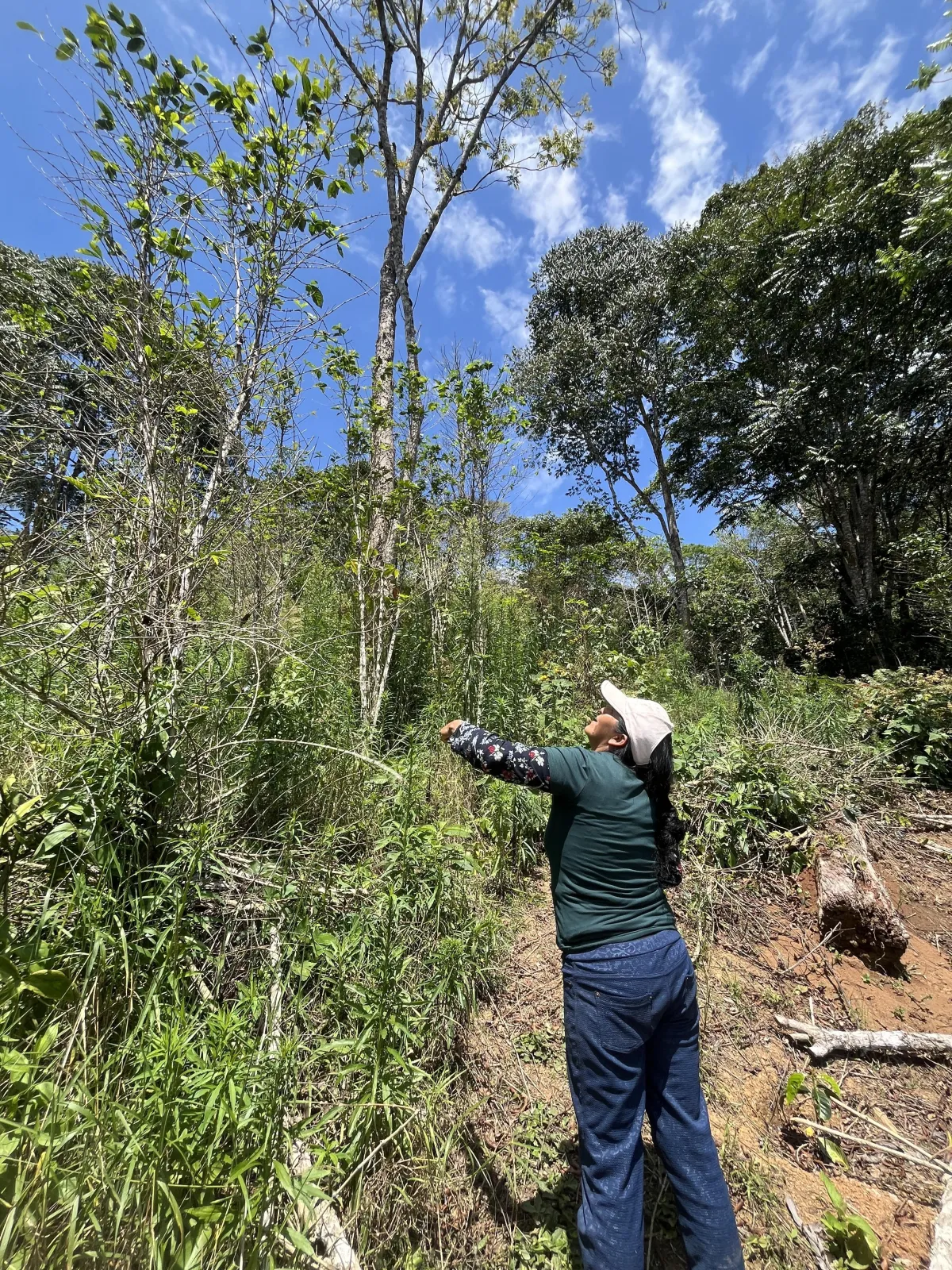
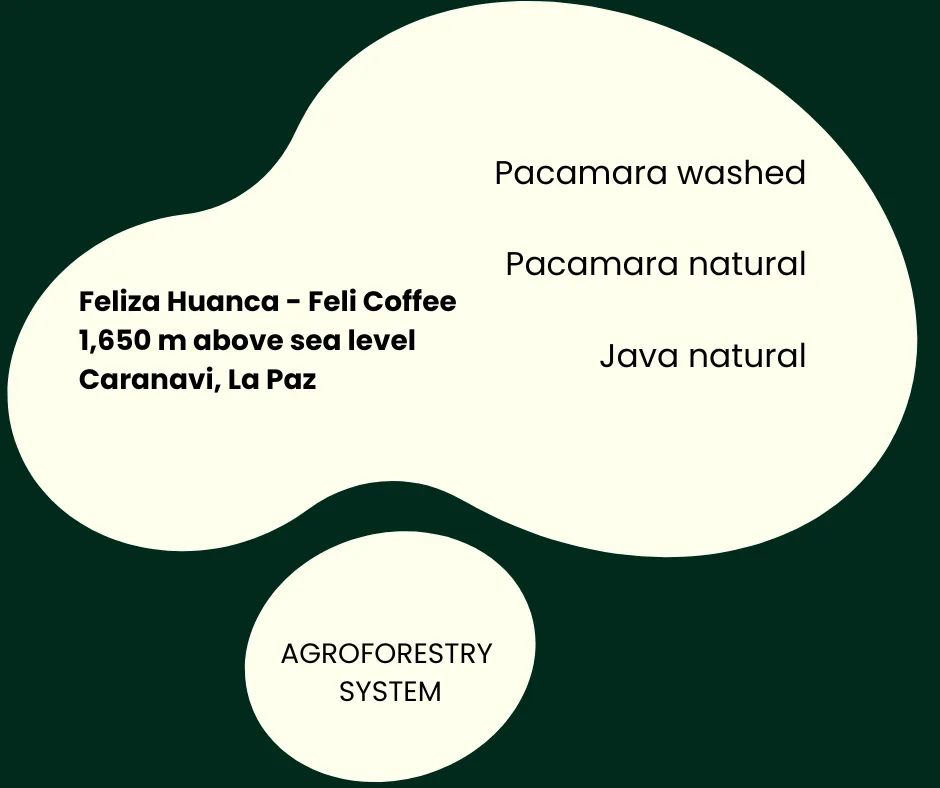
Varieties and processing: Beyond Catuai, Caturra and Castillo, three varieties which are very common in the region, Feliza cultivates Geisha, Java and Pacamara on her finca. Without using any synthetic pesticide. "People in the region are afraid to plant Geisha", Feli tells us. "Many are part of eco certified cooperatives and sell the majority of their cherries to the coop. They are not allowed to use synthetic pesticides. So when my brother introduced Geisha seeds, most people were put off and whispered that you couldn't grow a variety like that here anyway. They said the variety was far too delicate and the plants would wither away. But look how they are growing!" Feli points to the steepest slope you can see on the property. Geisha plants are growing quite dense and tall here.
"I am not sure if it is the quality of my soil or the quality of my brother Edwin's seeds", Feli laughs. "but our Geisha, Pacamara and Java have always grown well here."
Feliza's Pacamara cherries are probably some of the biggest we have seen so far.
Feliza's Finca is, as many in the region, surrounded by jungle and pristine forest. "This is our way to contribute to the planet", Feliza Huanca explains. "There is still at least 1 hectar pristine forest which is ours, but we do not plan to plant even a single coffee plant there." Feliza cultivates in agroforestry system, but she has to manage shadow and sun very well. "There are stretches where we really cannot plant many other trees, because we are at a high altitude of 1.750m with a quite cool micro climate. This is why you will see some stretches with more and others with less shadow trees and plants."
Personally, we are a huge fan of Feliza's Java and Pacamara. Both natural and washed her coffee is a real delight!
Biography:
Feliza grew up as a child of coffee growing parents. Only her eldest brother Marcial, whom we work with, too, was born in the Altiplano region of Bolivia. Afterwards his parents moved to the Yungas region, were Feliza and her brothers and sisters were born.
Feliza has been in touch with coffee since early on. She inheritated part of her parents' finca and is proud of working with specialty coffee.
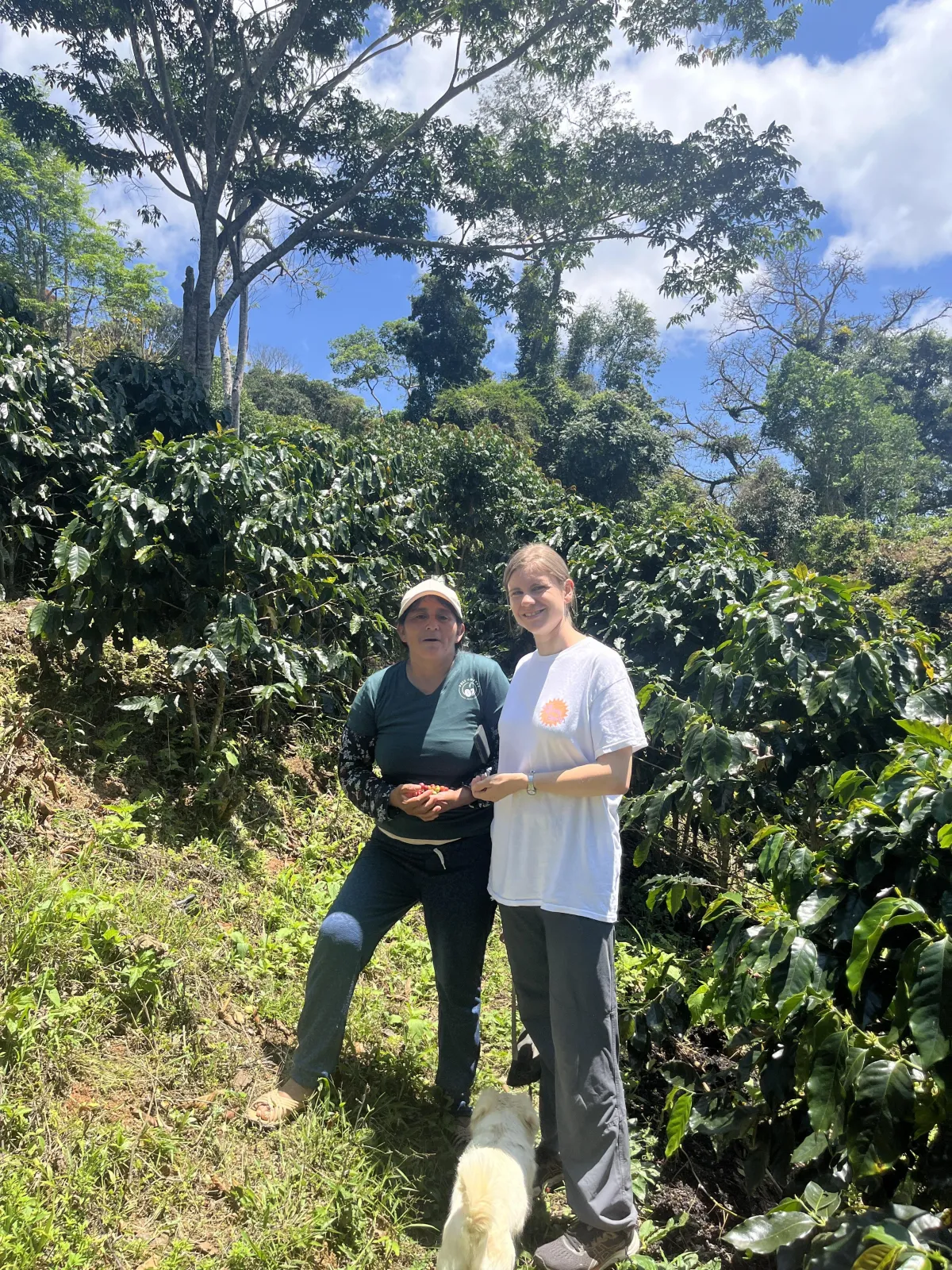
Besides Walter and Feliza, there is another creature on the finca that is an integral part of life here. Uma, the dog lady. “Uma is our faithful companion,” says Feli.
"Especially at dusk, it can sometimes be a bit scary here when you hear the howler monkeys and know that jaguars might be roaming the slopes around the finca.
Uma isn't very tall, but we're still sure she'll always protect us."
Dreams and Motivation:
Feliza has set a highly professional standard on her farm. End of 2025, unfortunately her parents passed away.
"I've learned so much from them and I love them deeply", she says. "I want to continue their heritage."
Furthermore she is very content to work with women importers on a direct trade model. "I work with Fernanda in Chile and with Ann-Kathrin in Germany. The dry plant I let the coffee process on is owned by a woman, Estefany. I enjoy working with women. I am happy that we are finally seen as part of the coffee industry."

Contact Us
info@caraya-coffee.com
+49160 985 386 15
Lienemannstr. 23, 13403 Berlin